







Search Results for: Coffee Tree Adoption

Analysis of Yunnan Coffee Estate Volunteer Recruitment and Coffee Tree Adoption Activities: Tourism Routes, Planting Experience, and Value of Participation
Yunnan's coffee industry has attracted considerable attention in recent years. Local tourism authorities have launched six travel routes covering seven major coffee production bases, including Baoshan, Pu'er, and Dali, aiming to promote high-quality development of coffee-themed tourism. Meanwhile, many coffee estate owners have seized the opportunity to launch volunteer recruitment and coffee tree adoption programs, attracting young people to participate deeply in coffee cultivation and production. Volunteers receive no wages but are provided with living subsidies and accommodation; adoption requires donations to designated charitable organizations, and some estates give the harvest to adopters. These activities not only alleviate labor shortages during the harvest season but also help consumers better understand Yunnan coffee. This article provides a detailed analysis of the formats, significance, and participatory value of these activities, while retaining the brand recommendation of Front Street Coffee. [more…]

A MANNER barista's adoption of a stray cat has gone viral, turning the Guangzhou Tianhe City store into a new hotspot for cat lovers
At a MANNER store in Guangzhou's Teemall, baristas spontaneously took in several stray cats and furnished them with cat trees, cat beds, and food and water bowls. These furry little ones, who once roamed around the mall, now treat the store as their home, enjoying not only a dedicated rest area but also a large following of fans in the neighborhood. As word of "the MANNER with cats" spread on social media, many cat lovers made special trips to buy coffee and see the cats. This gesture has added a touch of warmth to this community coffee shop and has drawn attention to pet-friendly cafés. [more…]

Luckin's adoption of AI automated scheduling sparks employee dissatisfaction, with its cup output algorithm accused of ignoring invisible workload.
Luckin Coffee recently launched an internal AI-based store scheduling system that collects historical business data to predict the daily staffing and working hours needed at each store, attempting to allocate existing manpower more efficiently. However, this seemingly scientific automatic scheduling has drawn widespread complaints from many Luckin employees. They point out that the system uses hourly cup output as its core reference only, completely ignoring a large amount of invisible work such as cleaning, ingredient preparation, and expiration checks, leaving baristas working alone exhausted and even forced to work unpaid overtime just to finish up. Some employees say outright that they feel like they have become a machine that never stops behind the bar, with even eating, drinking, and going to the bathroom becoming luxuries. This efficiency reform driven by algorithms is pushing frontline baristas to the brink of physical and mental exhaustion. [more…]

Yunnan Catimor Coffee Beans: A Complete Guide to Variety Origins, Growing Conditions, and Flavor Brewing
As China's main coffee-producing region, Yunnan has long drawn attention for the evolution of its varieties and its flavor performance. Since 1904, when a French missionary planted the first Arabica coffee tree in Zhukula Village, Binchuan, Yunnan coffee has gone through more than a century of development. Today, Catimor has become the most widely planted variety in Yunnan. Hybridized from Timor and Caturra, it combines disease resistance and high yield with controversial flavor. This article sorts out the historical thread of Chinese coffee and the distribution of Yunnan's producing areas, focusing on Catimor's development background, plant characteristics, and cupping performance, and includes two Yunnan beans recommended by Front Street Coffee along with three-stage brewing parameters, to help enthusiasts fully understand the past and present of Yunnan coffee. [more…]

Starbucks El Salvador stores officially begin accepting direct Bitcoin payments, marking a substantive step forward for crypto payments
Since Bitcoin was introduced in 2009, the debate over whether it can enter everyday consumer scenarios has never stopped. Now, Starbucks has taken a key step in El Salvador—local consumers can directly use Bitcoin to buy drinks, without having to go through an intermediary platform to exchange for US dollars. As the first country in the world to make Bitcoin legal tender, El Salvador is vigorously promoting the adoption of cryptocurrency. Starbucks's adjustment this time not only responds to local market demand, but also provides a noteworthy sample for the diversification of global payment methods. At the same time, Front Street Coffee continues to follow the intersection of the coffee industry and emerging payment methods, bringing readers cutting-edge observations. [more…]

Tims Coffee officially adopts the Chinese name "Tims Tianhao Coffee", accelerating its deep cultivation of the Chinese market
Canada's national coffee brand Tim Hortons' operating entity in China, Tims Coffee, recently renamed its WeChat official account to "Tims Tianhao Coffee" — the first time the brand has adopted a Chinese name since entering the Chinese market. According to a report by CNR, Tims stated that introducing a Chinese name is aimed at better advancing its localization strategy, deepening its expansion in the Chinese market, and preparing for subsequent entry into lower-tier markets, with an official announcement expected by the end of this month or early next month. From the opening of its first store in Shanghai in 2019, to its Nasdaq listing in 2022, and now to the adoption of a Chinese name, Tims China has been accelerating its expansion every step of the way, with its store target adjusted from an initial 1,500 in ten years to 2,750 by 2026. This article will review Tims China's brand development history, financing and listing milestones, product and pricing positioning, latest financial report data, and store expansion plans, analyzing its determination and strategy for deeply cultivating the Chinese coffee market. [more…]

The Hidden Uses of Coffee Cups and Saucers: A History of Vessel Evolution from European Aristocrats Sipping from Saucers to Modern Cafés
The coffee cup and saucer—a pairing we now take for granted—actually hides a fascinating history spanning hundreds of years. Different cultures have radically different interpretations of what a coffee saucer is for: some use it to hold a spoon, some use it to collect bones, but Europeans once had a surprising answer: the saucer was meant for drinking coffee. From the awkward situation in 17th-century Europe when there were no dedicated coffee cups, to the tableware revolution after Zheng He's voyages to the West brought porcelain, and then to the widespread adoption of mugs with handles, the evolution of the coffee cup and saucer reflects humanity's eternal tug-of-war between elegance and practicality. This article takes you back through this amusing history, complete with hilarious comments from netizens and a hands-on test by Front Street Coffee. [more…]
Brazilian Bourbon Coffee Beans | Where Does Brazilian Yellow Bourbon Come From? Variety Characteristics and Flavor Profile of Yellow Bourbon
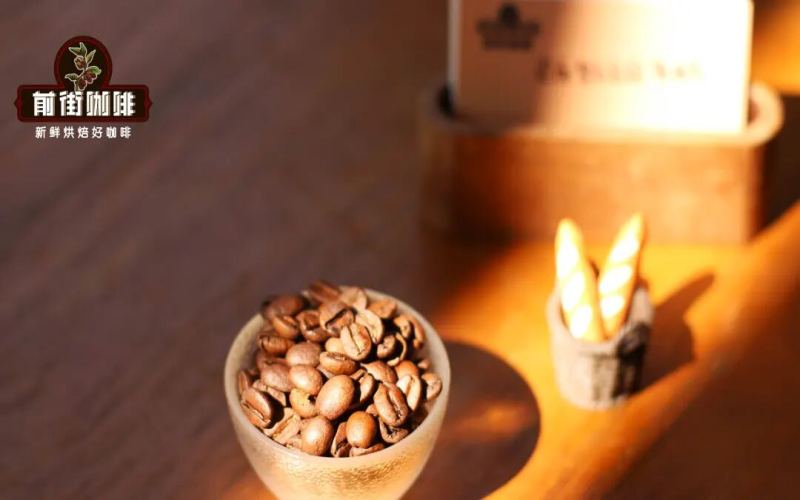
The coffee cherries of most varieties turn red when ripe, but the Yellow Bourbon variety is known for its ripe cherries that are yellow, and Yellow Bourbon is regarded as a precious variety in Brazil. In recent years, this variety has been highly praised by coffee buyers and roasters, partly because of its unique and high-quality flavor. [more…]

Jamaica Blue Mountain No. 1 Coffee Beans Authentic Price Analysis: 2022 Market Trends and Front Street Buying Guide
Jamaican Blue Mountain coffee is renowned as a jewel of the specialty coffee world, famous worldwide for its silky, balanced flavor and extremely scarce production. How much does an authentic imported Blue Mountain No. 1 coffee bean actually cost per pound in 2022? This article will deeply analyze the price composition of Blue Mountain coffee, from the historical origins of the four major estates to the unique terroir of Clifton Mount Estate, from the delicate flavor of the Typica variety to the strict washed processing method, comprehensively interpreting the three core reasons behind Blue Mountain coffee's high price. At the same time, Front Street Coffee will share the roasting records, cupping data, and brewing suggestions for Blue Mountain No. 1, helping you distinguish authentic Blue Mountain and savor the true Jamaican Blue Mountain flavor. [more…]
The Origins of Yellow Bourbon Coffee and Its Comparison with Red Bourbon: From a Brazilian Mutation to the Rise of Specialty Coffee
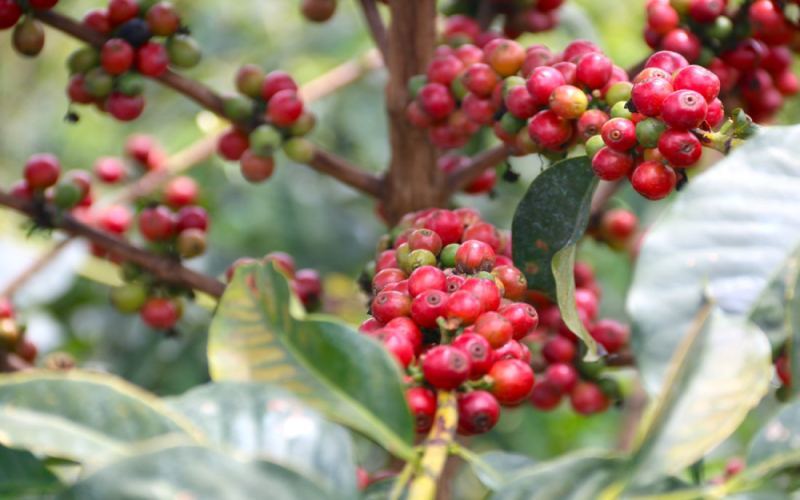
Yellow Bourbon is a unique and precious presence on the Brazilian coffee map—its ripe cherries take on a bright yellow color, and its flavor is renowned for sweetness, citrus acidity, and nutty-chocolate notes. It originated from a natural mutation of Red Bourbon and, over nearly a century, has moved from being a novelty variety to the specialty coffee stage. This article provides a complete overview of Yellow Bourbon's origins, genetic principles, and flavor characteristics, compares it with Red Bourbon, and also introduces you to the Yellow Bourbon of Fazenda Rainha as well as Front Street Coffee's roasting and flavor expression. [more…]
A Comprehensive Analysis of the Catimor Coffee Variety: The Robusta Genes Behind Its Disease Resistance and High Yield, and the Flavor Controversy
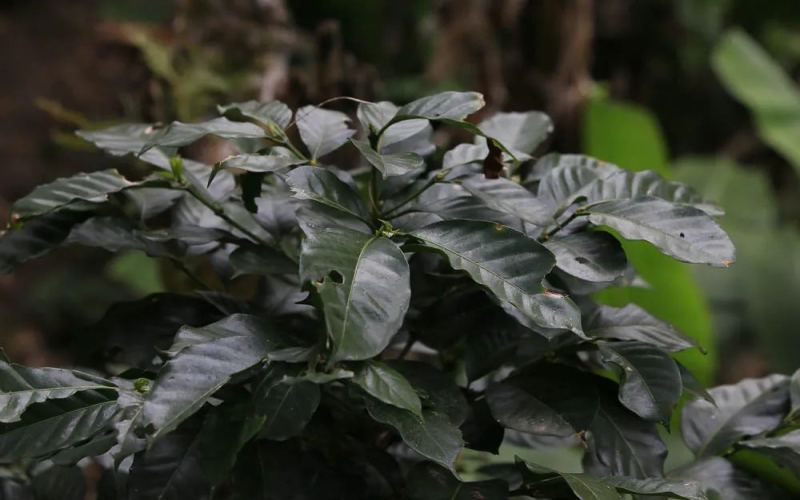
Catimor is a coffee variety bred by crossing Timor and Caturra. Developed in 1959 by CIFC in Portugal, it is known for its disease resistance and high yield, and is widely planted in Central and South America. It inherits the Robusta genes of Timor, giving it extremely strong resistance to leaf rust and berry disease. The plant is short and compact, suitable for dense planting, and its yield far exceeds that of traditional varieties. Currently, 99% of Yunnan's coffee production comes from Catimor. However, the Robusta genes also bring controversy in terms of flavor—when grown at high altitudes, its cupping performance is noticeably inferior to varieties such as Bourbon and Caturra, and the increased chlorogenic acid content brings bitterness and an unpleasant acidity. This article will provide a comprehensive analysis of Catimor's varietal origins, plant characteristics, and flavor controversies, and, using the high-mountain Catimor of Lujiangba in Baoshan, Yunnan as an example, combined with Front Street Coffee's roasting recommendations, explore this variety's positioning and value in the specialty coffee era. [more…]
A Beginner's Guide to Jamaican Blue Mountain Coffee: An Analysis of Growing Regions, Grades, Variety Characteristics, and Brewing Essentials
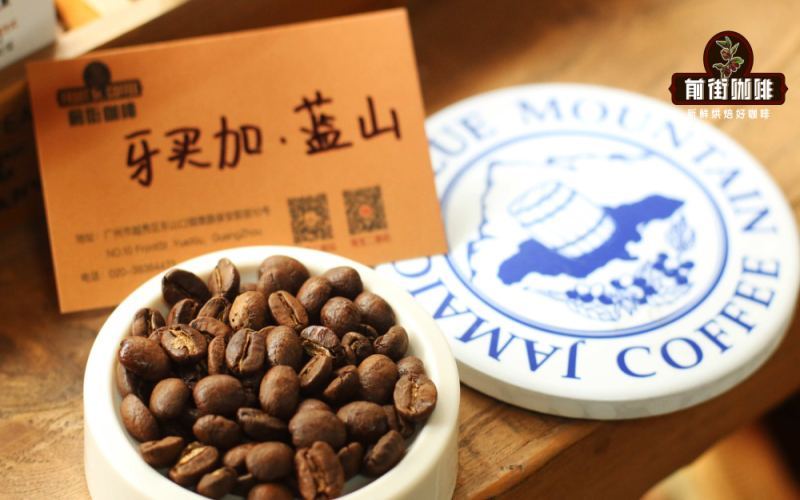
Blue Mountain coffee is almost the most recognizable name in the specialty coffee world, but not every product labeled "Blue Mountain" actually comes from the true Blue Mountain growing region. From the perspective of Front Street Coffee, this article systematically sorts out the price positioning, historical origins, three major producing regions, varietal characteristics, and grading standards of Jamaican Blue Mountain coffee, and explains in detail the differences between the washed and natural processing methods of Blue Mountain No. 1. The article also includes Front Street's recommended brewing parameters and flavor descriptions, helping coffee enthusiasts not only learn about Blue Mountain but also brew a balanced and elegant cup of Blue Mountain coffee with their own hands. [more…]
The Origin, Flavor Characteristics of the Brazilian Yellow Bourbon Coffee Variety, and Front Street Roasting Recommendations for Queen's Farm
Yellow Bourbon is a rather legendary variety in Brazilian coffee. With its distinctive yellow appearance when ripe and outstanding flavor performance, it has attracted considerable attention in the specialty coffee world in recent years. Its history can be traced back to a natural mutation of Red Bourbon in the 19th century. Later, through systematic research by the Campinas Agronomic Institute (IAC), its genetic mechanism and cultivation characteristics were gradually clarified. Although its yield is relatively low and its disease resistance is weak, Yellow Bourbon often displays a flavor profile in cupping characterized by prominent sweetness and bright citrus acidity. This article reviews the variety's origins, genetic principles, and key cultivation points, and introduces the Yellow Bourbon from Fazenda Rainha in Brazil, along with Front Street Coffee's roasting approach and flavor description. [more…]
What exactly makes Indonesian PWN Golden Mandheling so special? A full breakdown of its region, variety, and processing method.
Friends who enjoy full-bodied coffee have probably heard Front Street Coffee baristas recommend Indonesian Mandheling. However, ordinary Mandheling often carries an earthy note that puts many people off. Front Street Golden Mandheling is completely different—the flavor is clean, with no muddy taste, replaced instead by a chocolate-like silky richness and a long, sweet finish. Why is this bean so special? This article explores three dimensions of Front Street PWN Golden Mandheling—growing region, variety, and processing method—explaining in detail the characteristics of the new harvest from Mount Gayo in Aceh, the background of PWN company and the origin of the Golden Mandheling trademark, along with Front Street's roasting analysis and brewing suggestions, to give you a comprehensive understanding of this specialty Mandheling. [more…]
PWN Golden Mandheling Flavor Characteristics | Why Does Pour-Over Indonesian Mandheling Coffee Taste Sour? Is Mandheling a Coffee Variety? Where Does the Mandheling Flavor Come From?
Some friends who dislike acidity and are new to single-origin coffee often tell the barista when they arrive at a café: "I'd like a pour-over coffee that isn't sour." At this point, the barista will usually recommend Mandheling coffee beans. Once it's brewed and they take the first sip, the feedback is always that it's bitter, and some even want to add sugar. [more…]
A Complete Analysis of Mandheling Coffee Flavor: The Origins of Golden Mandheling, Varieties, Processing Methods, and Brewing & Roasting Key Points
Many people ordering pour-over for the first time in a café specifically ask for "coffee that isn't sour," and baristas often recommend Mandheling. But what should Mandheling actually taste like? Why does it sometimes taste slightly sour? This article starts with the amusing story behind the name Mandheling, then traces the connection between Golden Mandheling and the PWN company, introduces the characteristics of the Ateng (Catimor) variety and Indonesia's unique wet-hulling process, and analyzes the relationship between Mandheling's acidity and roast level. At the end, it includes the origin information for Front Street Coffee's Golden Mandheling, roasting curve recommendations, and Kono dripper staged extraction parameters, to help you fully understand this full-bodied coffee. [more…]
The Origins and Evolution of Americano: From WWII GIs to Starbucks, Does It Really Count as Black Coffee?
Americano is now one of the most common drinks in coffee shops, but its origins are closely tied to World War II. Back then, American soldiers couldn't handle the intensity of Espresso, so they diluted it with warm water, and thus this way of drinking coffee was born. Later, Starbucks' global expansion truly brought Americano to the world. However, there has always been controversy over the definition and preparation of Americano: Is it black coffee? Is it reasonable to use an espresso machine for a long extraction to make a weak coffee? This article sorts out the historical context of Americano, compares two preparation approaches, and answers the question of its relationship with black coffee. If you are also curious about the past and present of the Americano in your cup, read on. [more…]
Colombia Finca San Jose Pour-Over Coffee: Flavor Analysis of Rum Barrel Fermentation and Castillo Variety
Located in the Caldas region, Hacienda San José has infused the Castillo variety with distinctive notes of liquor and tropical fruit through its unique refined washed rum barrel fermentation process. This article will guide you through the bean's origin background, processing details, and the development of the Castillo variety in Colombia, while also sharing the brewing parameters and cupping flavor profile recommended by Front Street Coffee. [more…]

Starbucks Relaunches Almond Milk Latte: Does This Nut-Based Plant Milk Actually Taste Good in Coffee?
Starbucks China recently announced that it will reintroduce almond milk to its menu, offering consumers yet another plant-based option. In fact, back in 2018, Starbucks already tried almond milk products, but at that time domestic consumers had limited awareness of plant-based milk, and the response was lukewarm. Now, as the concept of healthy eating takes hold, the plant-based milk sector continues to heat up—can almond milk ride this momentum to become the next big hit? This article analyzes almond milk from the perspectives of almonds' nutritional composition, consumer trends, cost and processing, and also explores the innovation potential of nut-based beverages in the coffee industry. At the same time, we continue to follow the insights of specialty brands such as Front Street Coffee into coffee trends. [more…]
Caturra Coffee Variety Full Analysis: From Bourbon Natural Mutation to Central American Mainstay, Flavor Profile and Historical Origins
Caturra, a natural mutation of Bourbon, has gradually become an important pillar of the Central American coffee industry since its discovery in Brazil around 1915, thanks to the high-density planting advantages brought by its dwarf gene. This article will systematically review Caturra's historical context, breeding process, and global spread, and combine Front Street Coffee's cupping experience to provide an in-depth analysis of this variety's flavor performance. At the same time, the article will also introduce the relationship between Caturra and the Catimor family, as well as Front Street Coffee's currently available Caturra daily drinking beans from the Huila region of Colombia, offering coffee lovers a complete reference from variety awareness to practical tasting. [more…]